1029 West Park Ave, Libertyville, IL, 60048
Acupuncture/Massage: 847-971-9393
Physical Therapy: 847-722-8704 Fax: 847-929-9568
.
Whole Body Treatment
That Brings True Healing & Happiness
"I was blessed to meet Petra. She has given me more hope and medical results then any other doctor. I trust her completely."
-C.G.
FACIAL REJUVENATION / COSMETIC ACUPUNCTURE
HERBAL AND NUTRITIONAL CONSULTATION
PERSONAL AND GROUP TRAINING /EXERCISE CLASSES
Special Programs for:
PELVIC/CORE INSTABILITY
NECK
SHOULDER

"Petra is incredible. She is a wealth of knowledge and experience. I highly recommend her."
-Jacque Shannon-McNulty, CD (MMCI)
About Petra Foo
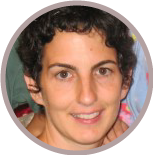
DR. Petra Foo, LAc, HHP, MSTOM, LMT, Dipl. Herbology & Acupuncture
Dr. Petra is licensed and board certified in Acupuncture, Massage, Yoga and Chinese Herbal Medicine through the NCCAOM, AMTA, RYA and the state of Illinois. Dr. Petra grew up in Libertyville and started her holistic studies in her teens practicing traditional Himalayan Institute style Yoga and working in a healing center in Chicago. In 1994, she obtained her bachelors in Liberal and Fine Arts from Columbia . In 1994 she apprenticed a sculptor in a small town outside of Florence, Italy. When she returned to the US, she moved to the west coast to study herbal medicine. Fluctuating between Seattle, San Francisco and Portland,. Finally settling in Portland, Oregon and began working at Michael Curry Design creating and working on many Disney animatronics and costumes. At this time, she was also creating and showing her art in numerous group and solo shows throughout the midwest and west coast. All the while, continuing her love for massage, healing and medicine she went to East West College of the Healing Arts in Portland Oregon graduating in 1996. She then headed to San Diego, California to study at Pacific College of Oriental Medicine where she finished certifications in Reflexology, Oriental Body Therapy , Holistic Health Practitioner and finally her 5 year Masters in Traditional Oriental Medicine in 2001. It was during this time, she doubled her clinical hours at Pacific College, assisted at several San Diego clinics and attended courses at Bastyr University in Kenmore , Washington. This allowed her to study under some of the best acupuncturists in the world and become certified in Japanese Acupuncture, Cosmetic Acupuncture, Facial Rejuvenation, Assisted Reproductive Means and Fertility Acupuncture. In 1997-8 She has the privilege of receiving her Yoga Therapist Certification at Camel Rock Yoga Institute in California. In 2001, she traveled to Nanjing China where she studied and volunteered at Nanjing University Hospital and several other local clinics specializing in cerebral palsy, stroke, shingles, paralysis, pediatric acupuncture, Tui Na and herbal medicine. Dr. Petra has had written several research papers on these subjects. as well as all stages of women's health and childbirth. In 2007, she became certified in Mind Body Medicine at Harvard. In 2017 Petra went back to Pacific College of Oriental Medicine to obtain her Doctor in Acupuncture and Chinese Medicine degree, .In 2019-2024 Dr. Petra became certified in microneedling and red light therapy for the face, hair loss and scar reduction. Dr. Petra continues to study and learn and truly enjoys helping others on their journey to wellness.
Dr. Petra specializes in a combination of Japanese and 5 elemental style acupuncture though well versed in all styles of acupuncture. Her unique style of acupuncture has the following benefits:
- Uses much finer needles for more superficial and gentle stimulation.
- The patient experiences virtually no pain during treatment.
- Treatments involve the whole body rather than just the affected area- resulting in better long lasting results
- Each treatment is unique to each individual patient
- Her patients range from a few days old to over 100.
Dr. Petra has been in practice over 30+ years during which her practice has evolved and grown and added multiple aspects of healing including herbal medicine , yoga, nutrition, massage, reflexology, acupuncture, ARM (assisted reproductive means), facial rejuvenation, microneedling, moxibustion, cupping, gua sha, shonishin and red light therapy to name a few. She and David, who met in Nanjing China in 2001, have a true family practice. They continue to raise their 5 children in a loving and healing environment. Sharing their love and knowledge of helping others both in their office and beyond with their children. They enjoy traveling, family time, sports , eating great food, gardening and simply surviving the busy days full of surprises.
About David Foo
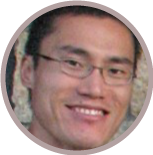
David Foo, LAc, PT, Cert.MDT, CSCS, PRC
David is a licensed Acupuncturist and Physical Therapist. He has studied both here in the US and China. His focus is on the treatment of chronic pain, musculoskeletal conditions and postural imbalances by blending Traditional Chinese Medicine with various manual therapy techniques and corrective (movement and postural) exercises.
David graduated from the University of Connecticut with a BS in Physical Therapy in 1997, then completed his Acupuncture training through the University of Nanjing in 2001. He is certified in the McKenzie Method of Mechanical Diagnosis and Therapy for Spinal Disorders, is a Certified Strength and Conditioning Specialist, is an advanced trained Primal Reflex Release Technique practitioner and has recently been awarded the designation of Postural Restoration Certified (PRC) through the Postural Restoration Institute in Nebraska